Embracing Regret: A Lesson from a Weekend of Travel Woes

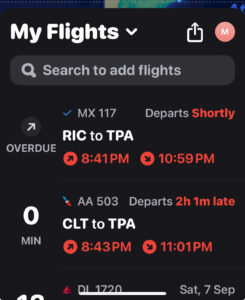
This past weekend, I found myself caught in a tangle of travel complications that left me reflecting on the unexpected power of regret. It all began with my original direct flight, which was delayed by at least five hours due to a mechanical issue. Frustrated but determined to get home sooner, I swiftly booked a different flight on another airline, which involved a layover.

It seemed like the right decision at the time—until the connecting flight also faced a mechanical issue, resulting in a four-hour delay.

To add salt to the wound, I later discovered that my original flight actually landed earlier than I did. The irony was palpable, and I found myself regretting my decision.
This experience brought to mind Daniel Pink’s book, The Power of Regret: How Looking Backward Moves Us Forward. Pink explores how regret, often seen as a negative and paralyzing emotion, can be a powerful tool for personal growth and decision-making. As I sat in the airport, waiting through yet another delay, I couldn’t help but think about the paradox of regret.

Understanding Regret: A Universal Human Emotion
In The Power of Regret, Pink argues that regret is not just a negative feeling to be avoided at all costs; it is a fundamental and universal human emotion that can be harnessed for good. He breaks down regret into four primary categories:
- Foundation Regrets are the “If only I had done the work” regrets. These are regrets of inaction—things we failed to do that would have laid a stronger foundation for our lives, like saving more money, taking better care of our health, or pursuing education.
- Boldness Regrets are the “If only I had taken the chance” regrets. They reflect the moments when we failed to step out of our comfort zones, whether by not traveling when we had the opportunity, not asking someone out, or not pursuing a dream job.
- Moral Regrets are the “If only I had done the right thing” regrets. These stem from actions that go against our own moral code, like cheating, lying, or hurting others.
- Connection Regrets are the “If only I had reached out” regrets. These regrets often involve relationships and the opportunities we missed to strengthen bonds with others, whether through a lack of communication, not making amends, or failing to express love and appreciation.
Outlook is a choice:
In my case, my travel woes fell into the realm of Boldness Regret—I took a chance on an alternate flight, hoping it would save time. When the event did not turn out the way I was hoping for, arriving early home, I could have two ways to look at the situation:
- Positive outlook: AT LEAST I made home.
- Negative outlook: Only if I did not change my plans, I could have arrived home by now.
I chose #1. At Least I got home.
The Impact of Comparison:
Pink argues in his book, that our abilities as human being to rewind an event, tell ourself a story , and compare the situations and outcomes contribute to our feeling of regret. In fact, it was the moment when I compared my current flight (indirect flight and delayed) to my older, abandoned flight (the direct flight), was the worst part of the experience.
Lessons from Regret: Turning Backward to Move Forward
One of the key lessons from Pink’s book is that regret can be a powerful force for growth. He emphasizes that we shouldn’t shy away from regret or dismiss it as a useless emotion. Instead, we should lean into it, analyze it, and use it as a compass to guide future decisions.
Here are three critical lessons from Pink’s insights that applied directly to my travel experience:
- Regret as a Teacher: Pink argues that regret is like a GPS for our lives, providing us with critical feedback about where we went off course. In my case, the regret over changing my flight taught me to trust my original decisions more, especially when faced with variables outside of my control, like mechanical issues. It reminded me to assess the trade-offs more carefully and to recognize that sometimes the first choice, despite its flaws, might still be the best one.
- The Value of Reflection: Pink underscores the importance of reflecting on our regrets to understand their roots. For me, this experience forced me to consider why I felt so compelled to change my flight in the first place. Was it a fear of wasting time or a desire to have control over an uncontrollable situation? By reflecting on these underlying motivations, I could see that my regret wasn’t just about the flight but about my relationship with uncertainty and my desire for control in chaotic situations.
- Reframing Regret as an Opportunity: One of the most powerful takeaways from Pink’s book is the idea of reframing regret not as a dead-end but as an opportunity for change. Rather than viewing regret as a sign of failure, we can see it as a moment of clarity—a way to understand what we truly value and how we can align our actions more closely with those values in the future. In my travel scenario, the regret I felt about my decision prompted me to rethink how I handle unexpected situations and whether I might benefit from cultivating more patience and acceptance of things outside my control.
Applying the Lessons of Regret in Everyday Life
Pink’s research shows that we all experience regret, but it’s how we deal with it that makes the difference. He offers a practical framework for dealing with regret:
- Normalize Regret: Understand that everyone has regrets, and they are a natural part of life. It’s not something to hide from but to acknowledge openly.
- Analyze Regret: Dive deeper into the regret to understand its root cause. What does this regret tell you about what you value, what you fear, or what you want from life?
- Use Regret Constructively: Rather than letting regret paralyze you, use it as a motivation to make better decisions in the future. Ask yourself, “What can I learn from this?”
A Final Thought on Regret and Moving Forward
As I reflect on my travel experience, I realize that it was less about the delays and more about the lessons that came with them. Regret doesn’t have to be a weight we carry forever. Instead, it can be a tool for greater self-awareness and personal growth. The next time I face a decision with uncertain outcomes, I’ll remember this experience and the lessons from Daniel Pink’s book. I’ll remember that regret is not the enemy; it’s a guide, helping me to understand myself better and navigate my path with greater clarity.
So, if you find yourself regretting a decision, big or small, remember that regret is a sign of being human. Embrace it, learn from it, and use it as a stepping stone to a more intentional, thoughtful future. After all, as Pink suggests, regret is not about looking back in despair, but about moving forward with greater wisdom.