The Paradox of Fear of Failure: Motivator or Paralyzer?

The Paradox of Fear of Failure: Motivator or Paralyzer?
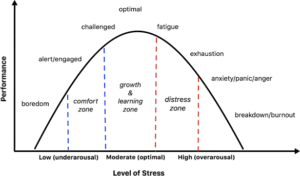
Fear of failure is a complex emotion that most people experience at some point in their life. It can serve as a potent motivator, pushing individuals to overcome challenges and strive for better performance. However, when fear becomes overwhelming, it can paralyze decision-making and hinder personal and professional growth. Understanding when fear of failure is beneficial and when it becomes a hindrance is crucial for harnessing it effectively.
Fear of Failure in Healthcare
In the healthcare sector, professionals are guided by the foundational principle of the Hippocratic Oath: “Do no harm.” This deeply ingrained directive amplifies the fear of failure, as the consequences of mistakes can be profoundly serious. Understanding how to navigate this fear, while acknowledging its potential benefits, is crucial for medical professionals who must balance the drive for perfection with the reality of human fallibility.
The Weight of the Oath
For healthcare professionals, the fear of failure is not just about personal or professional setbacks; it’s about the potential for real harm to patients. The Hippocratic Oath serves as a constant reminder of their responsibilities and the trust patients place in their hands. This can heighten anxiety and stress, particularly in high-stakes environments like surgery or emergency care, where decisions are made under pressure and the margin for error is minimal.
When Fear of Failure is Beneficial
1. Motivation and Preparation: Fear of failure often drives people to prepare more thoroughly and work harder to avoid potential pitfalls. This can lead to improved performance and greater success in various endeavors. For instance, students who fear failing an exam might study more diligently, thereby gaining a deeper understanding of the material and performing better. Music performers fearing embarrassment during public performance, will practice more to ensure success and avoid failure.
2. Innovation and Improvement: This fear can also inspire creativity and innovation. The desire to avoid failure encourages individuals to think outside the box and develop unique solutions to problems. It can foster a mindset that embraces challenges as opportunities and failures as lessons learned to learn and grow.
3. Resilience Building: Experiencing fear of failure can build resilience. By stepping out of their comfort zones and facing the risks of failure, individuals learn to cope with setbacks and develop strategies to bounce back stronger. There is a saying that we can’t appreciate the sweetness of success if we don’t experience the bitterness of failure first.

Positive Dimensions of Fear in Healthcare
Despite its daunting aspects, the fear of failure in healthcare can also be a powerful motivator for continuous learning and adherence to the highest standards of patient care. Here’s how it can serve a positive purpose:
1. Vigilance and Thoroughness: Fear of making mistakes can lead healthcare professionals to double-check their work, follow protocols meticulously, and be extremely vigilant in patient care. This thoroughness is crucial in preventing errors and ensuring patient safety.
2. Commitment to Continuous Education: The potential for failure drives medical professionals to keep up-to-date with the latest research, technologies, and treatment methods. Continuous education is essential in a field that constantly evolves and where new knowledge can significantly impact patient outcomes.
3. Team Collaboration and Communication: Understanding the risks involved fosters a culture of teamwork and communication. Medical professionals who fear the consequences of failure often engage more actively in discussions with colleagues, seeking advice and second opinions, which can lead to better patient outcomes.
When Fear of Failure Becomes Paralyzing
1. Avoidance Behavior (playing it safe): One of the most detrimental aspects of an intense fear of failure is the tendency to avoid challenging tasks or opportunities. This can manifest in procrastination, giving up on goals, or choosing paths that are less risky but also less rewarding. Such avoidance behaviors limit personal development and can lead to feelings of dissatisfaction and regret.
2. Negative Self-Perception: When fear of failure spirals out of control, it can severely impact an individual’s self-esteem and self-worth. Constantly fearing failure may lead someone to internalize these negative outcomes, believing that they are inherently incapable or unworthy. This distorted self-perception can stifle ambition and suppress the motivation to try new things.
3. Decision Paralysis: In extreme cases, fear of failure can lead to decision paralysis, where the fear of making the wrong choice prevents any decision at all. This can be particularly crippling in professional settings, where timely and decisive action is often required.
4. Fixed Mindset: A fixed mindset, a term popularized by psychologist Carol Dweck, describes the belief that one’s abilities, intelligence, and talents are fixed traits. Individuals with high level of fear of failure may start seeing the world with a fixed mindset and start seeing challenges as threats to their intelligence or competence.
Striking the Right Balance
To strike a healthy balance between benefiting from the fear of failure and not letting it overwhelm you, consider the following strategies:
1. Reframing Thoughts: Change the narrative surrounding failure. Instead of viewing it as a negative endpoint, see it as a stepping stone towards success. Reframing failure as a normal part of the learning process can reduce its intimidation factor and make it less daunting.
2. Setting Realistic Goals: Create achievable, yet challenging, goals. This helps maintain motivation and reduces the likelihood of overwhelming fear. Breaking larger goals into smaller, manageable tasks can also provide frequent opportunities for small successes, boosting confidence and resilience.
3. Developing a Growth Mindset: Cultivate a growth mindset, which focuses on the potential to learn and improve through effort and perseverance. Embrace challenges as opportunities for growth, rather than threats to personal value or identity.
4. Exposure to Controlled Risk: Gradually expose yourself to situations where there is a risk of failure, in a controlled and supportive environment. This can help desensitize the fear response and build confidence. For example, practicing public speaking in front of friends or family can prepare you for larger, more intimidating audiences.
5. Seeking Feedback and Learning from Mistakes: Actively seek constructive feedback and use it to make improvements. Understanding what went wrong and how to correct it demystifies failure and turns it into a learning opportunity.
6. Focus on Learning Over Performance: Shift the focus from proving oneself to improving oneself. Emphasize learning and growth over merely achieving good results.
7. Set Learning Goals: Instead of setting goals solely based on outcomes, set goals related to the process of learning. For example, aim to master a new skill rather than simply to win a competition.
8. Encourage Perseverance: Teach the value of persistence in the face of challenges. Understanding that effort can lead to improvement over time may reduce the fear of immediate failure.
Conclusion
The fear of failure is a powerful emotion that can both drive us towards excellence and hinder our progress. Recognizing when it is serving a positive function and when it is becoming a barrier is key to personal and professional development. By implementing strategies to manage and mitigate the negative aspects of this fear, individuals can harness it as a force for growth rather than a source of paralysis. Ultimately, the goal is not to eliminate the fear of failure, but to learn to live with it productively and transform it into a catalyst for success.