AI era new leadership skills in healthcare
Evolving Leadership Skills in the Era of Artificial Intelligence
In the rapidly evolving landscape of the modern world, leadership skills must adapt to the challenges and opportunities presented by artificial intelligence (AI) especially in healthcare. As AI technologies become increasingly integrated into various aspects of business and society, leaders must navigate new territory with agility and foresight. Let’s explore how leadership skills are evolving to meet the demands of the AI era:
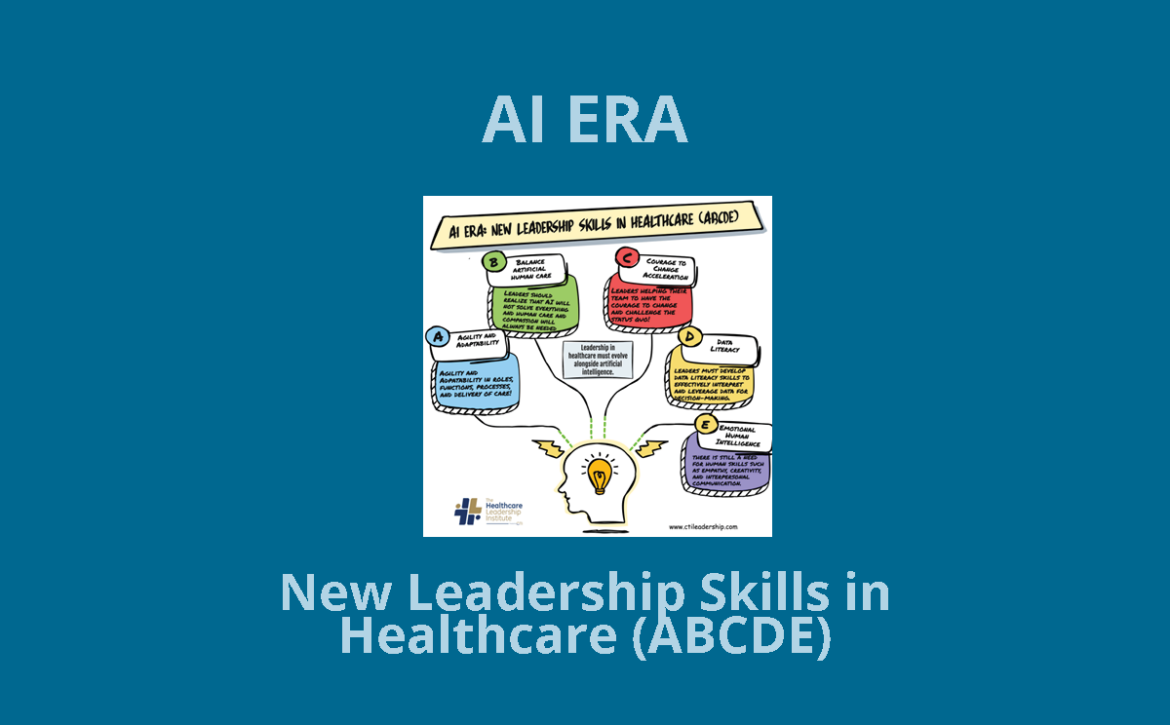
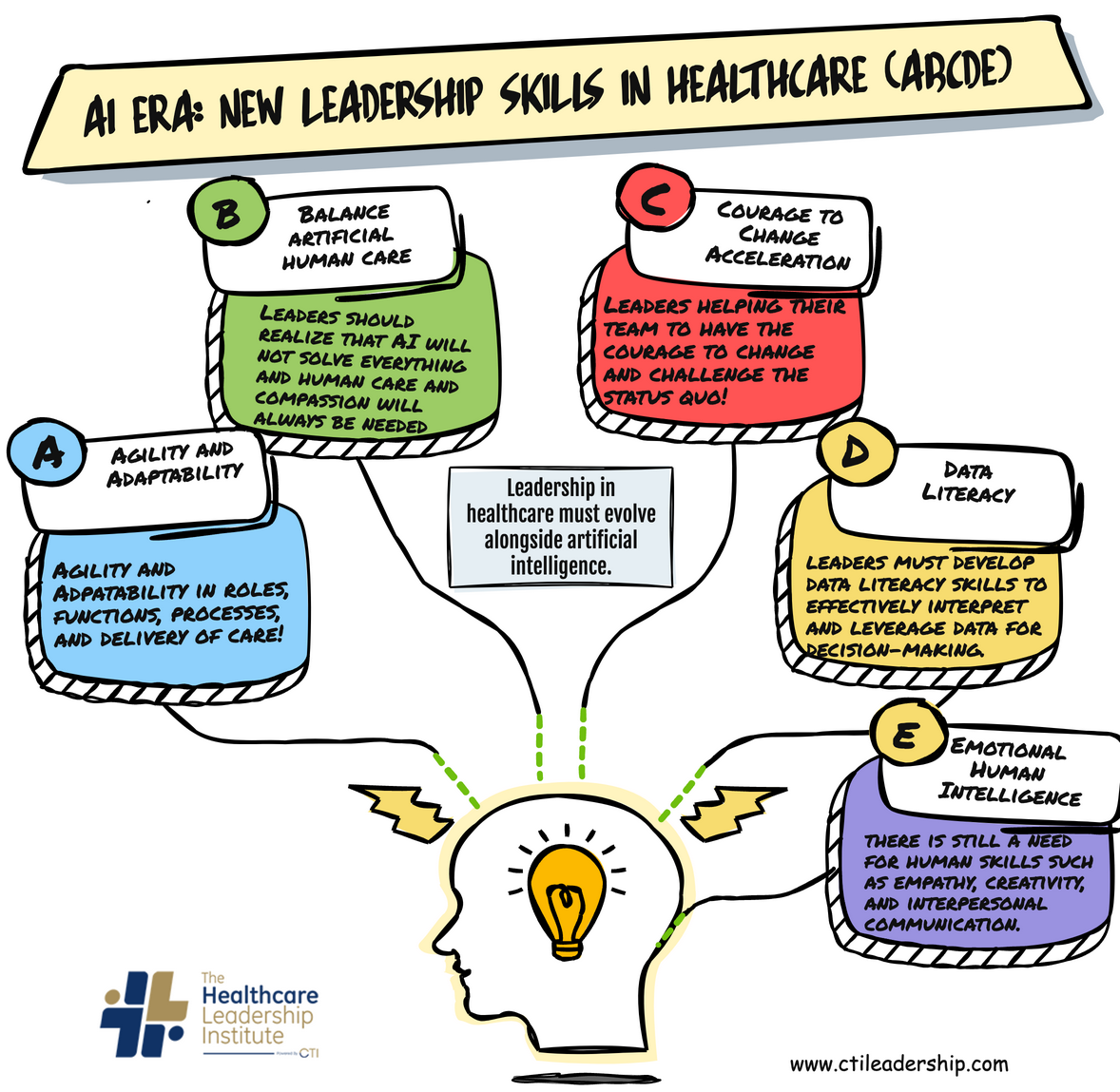
(A) Agility and Adaptability: Leaders must exhibit agility and adaptability in roles, functions, processes, and care delivery. This involves being responsive to changes and seizing new opportunities while fostering a culture of innovation and continuous improvement.
(B) Balance Artificial and Human Care: Leaders recognize that AI cannot replace the human touch in care. Empathy, compassion, and human connection are essential components of effective caregiving that AI cannot replicate. Leaders must strike a balance between leveraging AI technologies and ensuring human care remains central to their organization’s mission.
(C) Courage to Change Acceleration: Leaders foster a culture of courage and change acceleration, empowering teams to challenge the status quo, embrace innovation, and adapt to new technologies and ways of working.
(D) Data Literacy: With AI relying heavily on data-driven insights, leaders must develop strong data literacy skills to effectively interpret and leverage data for decision-making.
(E) Emotional Human Intelligence: Leaders prioritize emotional intelligence, understanding its enduring importance in fostering trust, collaboration, and innovation. Skills such as empathy, creativity, and interpersonal communication are critical for building inclusive and successful work cultures alongside AI technologies.
Ethical Considerations: AI raises ethical concerns related to privacy, bias, and job displacement. Leaders must navigate these complex ethical landscapes and develop strategies to ensure responsible and ethical AI use.
Collaboration with AI: Effective leaders know how to collaborate with AI systems, leveraging their capabilities to improve decision-making and productivity. This might involve integrating AI into workflows or developing new problem-solving approaches.
Strategic Thinking: Leaders need a strategic vision for how AI can drive innovation and create value. This requires identifying opportunities for AI adoption and developing long-term implementation plans.
In conclusion, leadership in the era of artificial intelligence requires a blend of technical expertise, emotional intelligence, and strategic vision. By embracing these evolving leadership skills, leaders can navigate the complexities of the AI landscape and drive their organizations towards success in the digital age.

For training and coaching on these leadership skills, contact us today!