Millennium Physician Group Leadership Academy Session
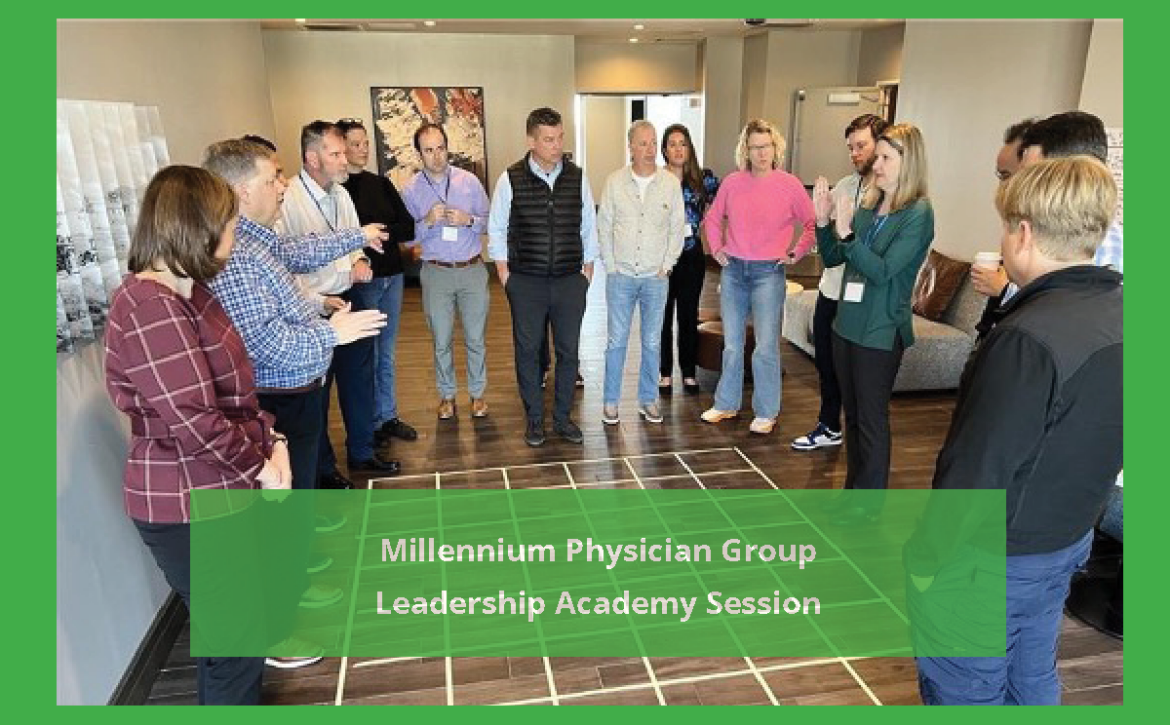
HLI recently collaborated with Millennium Physician Group for two-days of leadership development sessions within the Millennium Physician Group Leadership Academy (cohort 1). The sessions centered around Systems Thinking and Coaching for Performance Improvement and Development, led by HLI facilitators Kim Faith and Margie West. Thank you to MPG Senior Vice President & Medical Director of Value Based Care Scott Smith, MD, and Chief of Staff Jacqueline Cardillo for their leadership, partnership, and planning of this fantastic weekend! Millennium Physician Group’s continued commitment to leadership development is exceptional and we are honored to partner with them on this leadership development journey.
Systems Thinking Session Highlights
During the Systems Thinking session we delved into the intricacies of understanding and navigating complex systems. Systems thinking transcends traditional linear approaches to problem-solving and change management. It empowers leaders to navigate the complexities of the modern world with clarity, insight, and foresight. Below we share the key insights gained and the transformative impact of embracing a systems thinking mindset.
Understanding the Multifaceted Connections in Leadership
Leaders often find themselves juggling a myriad of connections when navigating through changes. In this session, we gained a profound appreciation for the interconnectedness of various elements within a system. We realized that what lies beneath the surface—what we can’t always see—is often just as crucial as what is visible to the naked eye.
Embracing the Three Levels of Thinking
To effectively solve problems and drive change, we explored the three levels of thinking inherent in systems thinking: Structures, Patterns, and Events. Understanding these levels enabled us to approach challenges with a holistic perspective, recognizing the underlying structures that shape patterns and events.
Analyzing Situations for Optimal Results
We learned that when analyzing a situation, starting at the events level and working our way up allows us to uncover patterns and underlying structures. By tracing back from observable events to identify recurring patterns, we gained deeper insights into the systemic root causes of issues.
Driving Change and Improvement from the Ground Up
Conversely, when seeking to drive change or improvement, we discovered that starting at the structures level and working our way down yields the most effective results. By examining the fundamental structures that govern a system, we were able to identify leverage points for intervention and enact meaningful transformations.
As we continue our journey as leaders, let us embrace the transformative power of systems thinking. Let us navigate complexity with confidence, knowing that by understanding the whole, we can effectively influence the parts, and by shaping the parts, we can impact the whole.

Coaching for Performance Improvement Highlights
In the fast-paced world of leadership, the ability to coach for performance improvement stands as a cornerstone of effective management. During the “Coaching for Performance Improvement” session, we explored strategies to enhance performance, provide constructive feedback, and celebrate success. Below are the key objectives of the session and the insights gained:
Providing Clear and Frequent Performance Feedback
Clear and frequent performance feedback is essential for guiding individuals towards success. During the session, we emphasized the importance of providing timely feedback to reassure team members that they are on the right track or to help them course correct when needed. By cultivating a culture of continuous feedback, we empower individuals to thrive and grow in their roles.
Celebrating Successes and Acknowledging Great Work
Recognizing and celebrating achievements are vital components of effective coaching. We learned the importance of catching people in the act of doing great work and acknowledging their contributions. By shining a light on examples of optimal performance and results, we inspire motivation, foster a positive work environment, and reinforce desired behaviors.
Rethinking the Feedback Approach
Gone are the days of the feedback sandwich. Instead, we embraced a new approach—one focused on sharing positive feedback for its own sake, without it being followed by areas for improvement. This shift in mindset allows us to genuinely celebrate achievements and create a culture that values recognition and appreciation.
Delivering Constructive Feedback with Sensitivity
When corrective feedback is necessary, it’s essential to approach the conversation with sensitivity and tact. We learned to deliver feedback in private, focusing on specific behaviors rather than making characterizations. By providing timely and constructive feedback, we empower individuals to grow and develop while maintaining their dignity and self-esteem.