Building a Culture of ONE: Lessons from the One Ford Initiative
In today’s dynamic and competitive business landscape, the concept of unity within organizations has never been more crucial. Siloed divisions and fragmented focuses can impede progress, hinder collaboration, and ultimately limit the success of an organization. However, by fostering a culture of ONE — One team, One goal, One plan — organizations can transcend these barriers and unlock their full potential. Drawing inspiration from initiatives like the One Ford program, this blog explores practical steps to cultivate a culture of unity within your organization.
Understanding the Importance of Unity: Before delving into the strategies for building a culture of unity, it’s essential to grasp why it matters. Unity fosters cohesion, alignment, and synergy among team members. It encourages collaboration across departments, leading to increased efficiency, innovation, and ultimately, better results. Moreover, a unified workforce is more resilient in the face of challenges, as individuals rally together towards a common purpose like we saw during COVID.
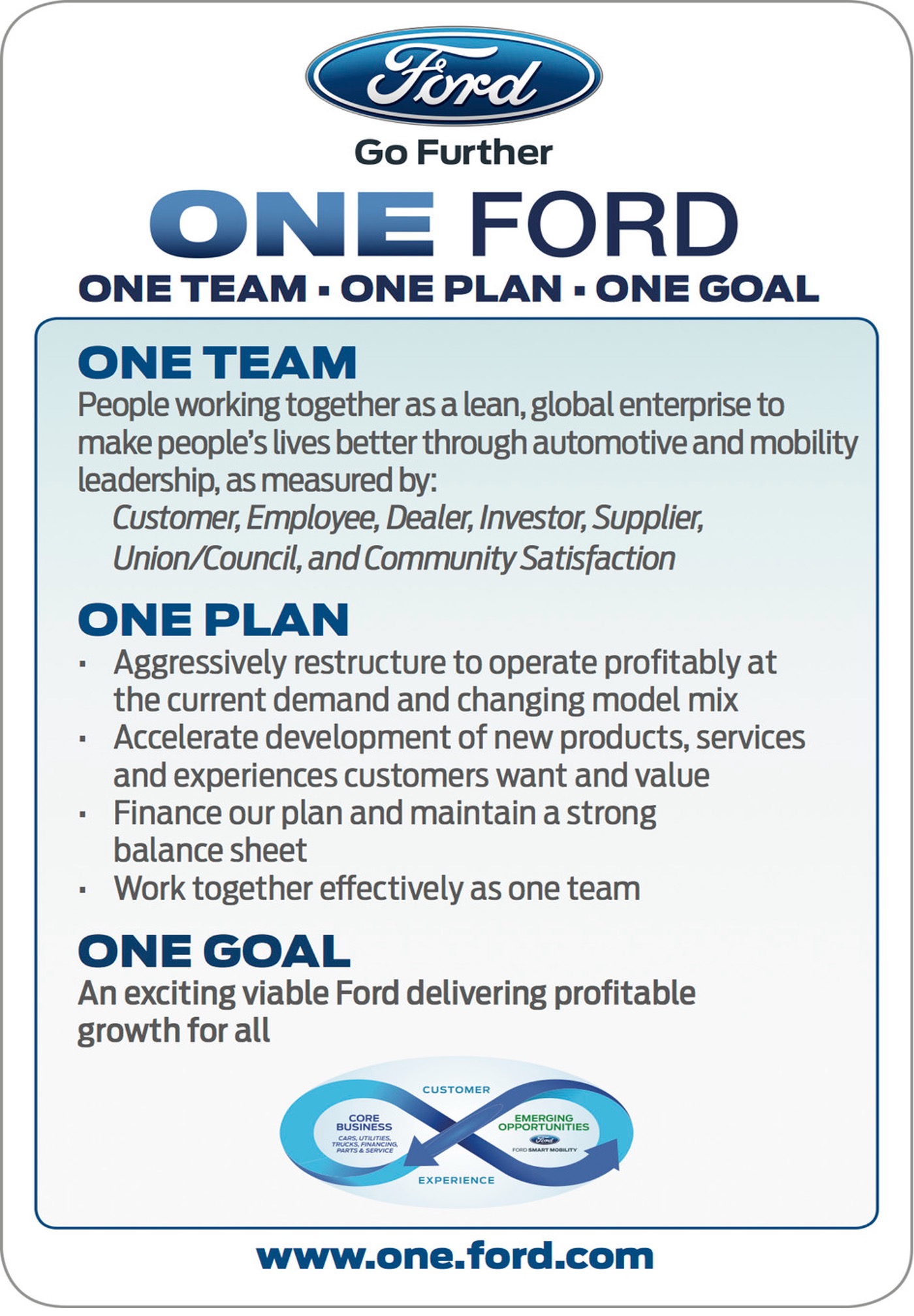
Lessons from the One Ford Initiative: The One Ford initiative serves as a compelling example of how a large organization tackled silo mentality and embraced unity to drive success. Launched in response to internal fragmentation and declining performance, One Ford aimed to break down barriers between departments, streamline operations, and refocus efforts on shared goals.

One Ford Initiative - One Team, One Plan, One Goal (Front of Card)
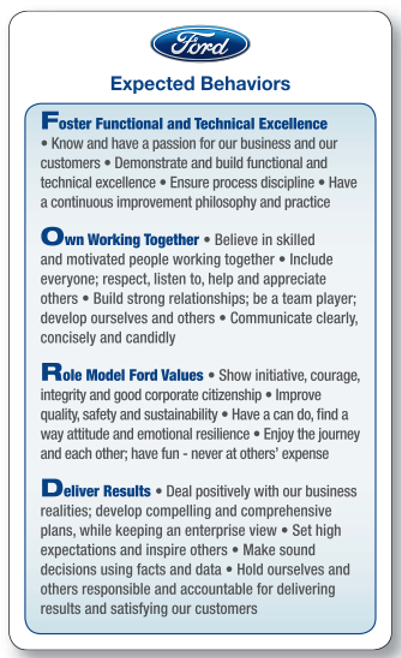
(Back of Card) - Expected Behaviors Card
At the core of the One Ford Initiative—and any endeavor to foster unity—is unwavering leadership commitment. Allan Mulally and his senior leaders championed the cause, embodying the values of collaboration, transparency, and shared accountability. By setting the tone from the top, leaders inspire trust and motivate employees to embrace a unified mindset.
Effective communication is the lifeblood of unity within an organization. Leaders should articulate a compelling vision that resonates with every member of the team, transcending departmental boundaries. Transparent communication channels facilitate the sharing of information, ideas, and feedback, fostering a sense of inclusivity and collective ownership.
To achieve unity, it’s imperative to align individual and departmental goals with the overarching objectives of the organization. This requires breaking down silos and encouraging cross-functional collaboration. By establishing common metrics for success and incentivizing cooperation, organizations can ensure that everyone is working towards the same end goal.
The expected behaviors were clearly articulated and communicated on the back of the One Ford card. Expectations of excellence, collaboration, role modeling the values and delivering results.
Encouraging collaboration and teamwork lies at the heart of building a culture of unity. Leaders should create opportunities for employees to work across departments, fostering mutual understanding and respect. Cross-functional teams can tackle complex challenges more effectively, drawing on diverse perspectives and skill sets.
Empowering employees to take ownership of their work fosters a sense of pride and commitment. However, with empowerment comes accountability. Leaders must hold individuals and teams accountable for their actions and outcomes, while also providing support and resources to facilitate success. This balance ensures that unity is not achieved at the expense of individual autonomy.
Reenforcing the expected behaviors requires active recognition of the efforts for modeling the values and behaviors. Similarly, having the courage to have consequences when leaders and team members do not live the values and exhibit the expected behaviors.
Cultivating a culture of unity is an ongoing journey that requires dedication and adaptability. Organizations must continuously evaluate their processes, structures, and practices to identify areas for improvement. By fostering a culture of continuous learning and adaptation, organizations can stay agile and responsive in the face of change.
In an era marked by rapid change and complexity, the importance of unity within organizations cannot be overstated. By drawing inspiration from initiatives like the One Ford program, organizations can break down silos, foster collaboration, and align efforts towards shared goals. Through leadership commitment, clear communication, goal alignment, collaboration, empowerment, and continuous improvement, organizations can create a culture of unity that propels them towards sustained success.
| Cookie | Duration | Description |
|---|---|---|
| cookielawinfo-checkbox-analytics | 11 months | This cookie is set by GDPR Cookie Consent plugin. The cookie is used to store the user consent for the cookies in the category "Analytics". |
| cookielawinfo-checkbox-functional | 11 months | The cookie is set by GDPR cookie consent to record the user consent for the cookies in the category "Functional". |
| cookielawinfo-checkbox-necessary | 11 months | This cookie is set by GDPR Cookie Consent plugin. The cookies is used to store the user consent for the cookies in the category "Necessary". |
| cookielawinfo-checkbox-others | 11 months | This cookie is set by GDPR Cookie Consent plugin. The cookie is used to store the user consent for the cookies in the category "Other. |
| cookielawinfo-checkbox-performance | 11 months | This cookie is set by GDPR Cookie Consent plugin. The cookie is used to store the user consent for the cookies in the category "Performance". |
| viewed_cookie_policy | 11 months | The cookie is set by the GDPR Cookie Consent plugin and is used to store whether or not user has consented to the use of cookies. It does not store any personal data. |
Select a discovery call date that works for you