Uncommon Leadership in the Age of AI- Co-Create
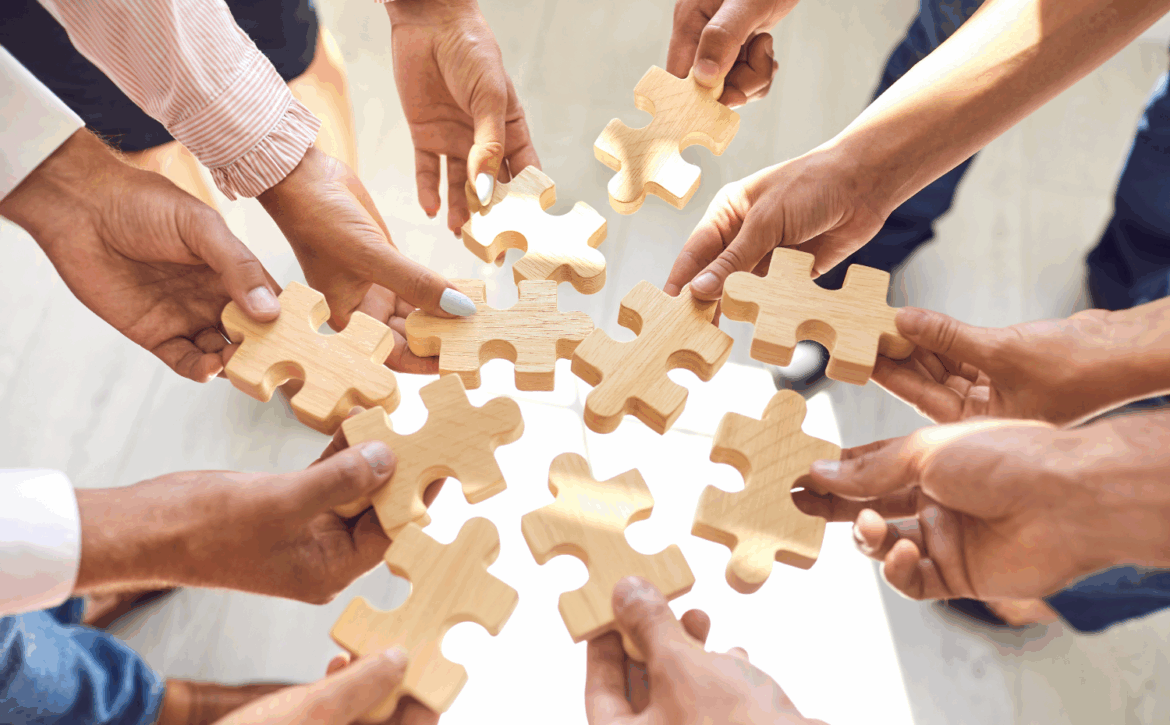
Chapter 7: Leading with Co-Creation
What if AI didn’t just change how we work, but why we work? Leaders today face this very question as they navigate a future shaped by intelligent machines and human potential.
It is already clear that leaders today stand at a historic crossroads. AI will either fracture our organizations—widening divides, deepening mistrust, and disempowering humans—or it will forge a new era of collective intelligence, meaningful work, and resilient collaboration. The difference lies in leadership.
This crossroads is not simply a technological revolution—it is a leadership transformation.
AI will reshape every aspect of professions and organizations, altering decision-making processes and redefining work itself. The leaders who rise to the top will be those who are able to transform this unprecedented complexity into opportunity. They will embrace the new reality that success hinges on: not hierarchical command but boundary-spanning collaboration, distributed ownership, and intentional human-machine partnership. No longer is leadership about knowing all the answers, but gathering the right questions and the right people. It is breaking down boundaries, inviting ownership, and orchestrating a harmonious collaboration of humans
We have already considered today’s leaders will best succeed if they cultivate calm, clarity, courage, curiosity, and human connection. Next we look at what it means to Co-Create.
To effectively co-create the future, leaders must master three critical capabilities:
1. Maximizing innovation and collaboration through cross-functional teaming.
2. Leveraging AI for human-machine collaboration to elevate human potential.
3. Creating a culture of ownership

Capability #1 – Maximizing innovation and collaboration through cross-functional teaming
Cross-functional teaming is about learning while in action across diverse teams in pursuit of a shared purpose. It requires people to bring their full attention, curiosity, and humility to problems that often don’t have clear solutions. It invites each person to speak up, listen intently, and respond constructively. These are not just interpersonal skills—they are expressions of ownership. When people feel psychological safety—when they know their voices will be heard without fear of humiliation—they are more likely to contribute ideas, take risks, be curious, raise concerns, and take initiative.
Traditional organizational structures of positional authority and rigid roles limit this kind of teaming. Rather, it emerges when people choose to take responsibility for the collective success of the group. In high-performing organizations, individuals don’t just do their part,
they care about the outcome, question assumptions, fill gaps, and learn together. This active, shared responsibility transforms how work gets done.
Creating a teaming mindset begins with reframing how we see our role at work. Rather than viewing ourselves as cogs in a machine, we recognize ourselves as active contributors to a living learning system. Everyone matters. Everyone has a part to play. This perspective shifts accountability from being imposed to being internalized. People hold themselves accountable—not because someone is watching, but because they care about the mission and their colleagues. In teaming environments, individuals ask, “What does the team need from me right now?” or “What can I do to move us forward?” This is more than just learning, it is ownership.
Of course, teaming isn’t always comfortable. It asks people to stretch beyond their job descriptions and adapt to changing conditions. It asks leaders to ensure that decentralized teams align with shared values and goals, and requires intentional communication, clear purpose, and a strong cultural foundation. This means combining a compelling culture with a clear set of priorities and line-of-sight at all levels of the organization. A shared sense of culture and direction fosters cohesion, guides decision-making, and helps individuals prioritize their work in ways that contribute to collective success.
While teaming activates ownership across diverse human groups, AI introduces a new kind of teammate. To lead in this reality, we must rethink what collaboration means.
Capability #2 – Leveraging AI for human-machine collaboration to elevate human potential
As we enter this new frontier of leadership, we neither have a clear map nor a clear destination, so what can we do to prepare ourselves and those we lead to find our way to success? We can be certain that we need to adopt and encourage the following three mindsets:
· Leaders must shift from control to coordination
· Emotional Intelligence must become more important, not less.
· Team dynamics must be redefined as human-machine collaboration
As AI becomes a powerful presence in our workplaces, it’s natural for people to feel a mix of excitement, uncertainty, and concern. Many wonder: Will I be replaced? Will my work still matter? These are not just technical questions—they’re deeply human ones. That’s why the leaders of tomorrow must become architects of meaningful integration, helping people understand, adapt to, and shape how AI fits into their work and identity.
Leading in this space requires more than technological fluency. It demands a shift in mindset and culture. Leaders must move from control to coordination—not directing every action, but guiding dynamic partnerships between people and machines. This means designing workflows that enhance, not diminish, the value of human contribution. AI may accelerate data processing, but humans still provide context, empathy, and moral judgment. It’s the leader’s job to clarify where each adds value.
Emotional intelligence becomes not optional, but essential. As AI takes over routine tasks, people need reassurance that their creativity, insight, and presence are irreplaceable. Leaders must communicate this often—and show it through action. They must empathize with the discomfort of change, create space for learning, and model resilience in the face of ambiguity. It’s not just about using AI wisely. It’s about helping people grow alongside it.
Finally, team dynamics must evolve. In many industries, AI is becoming a kind of teammate: writing drafts, analyzing options, or prioritizing work. But this raises new questions: Who is accountable when AI makes a mistake? How do we ensure the work still feels meaningful? These aren’t just process challenges—they’re identity questions. Leaders must engage teams in co-designing how work is distributed and how decisions are made. When people feel they have a say in shaping the future, they’re more likely to trust it—and own it.
These shifts to greater coordination, emotional intelligence, and evolving team dynamics will need to be supported by a strong culture that holds up these practices as highly valued.
Creating that kind of culture is the next capability.
Capability #3 – Creating a Culture of Ownership
As AI transforms every element of our work, culture becomes the glue that holds the organization together. AI presents a unique opportunity to support the capabilities described above to create a culture of ownership by offering timely data, predictive insights, and automated processes that enhance individual and team performance. However, for ownership to flourish, leaders must go beyond simply deploying AI tools—they must foster environments where employees are invited to interpret insights, contribute to decisions, and take initiative based on both human judgment and machine recommendations. When employees feel trusted to use AI as an extension of their capabilities, rather than a tool of surveillance or control, they are more likely to act with accountability, creativity, and purpose.
Leaders play a critical role in this transformation by modeling curiosity, transparency, and collaboration with AI systems. They must create environments where learning from AI is normalized, ethical use is prioritized, and feedback loops between humans and machines are integrated into daily work. Ownership thrives when people are invited to experiment, iterate, and improve how AI is used in their roles—transforming AI from a top-down solution into a co-created, evolving partnership. By positioning AI as a catalyst for learning and growth rather than replacement or compliance, leaders can cultivate a sense of shared responsibility and pride in how the organization adapts, performs, and innovates together.

Ask yourself: Are you creating space for your team to shape how AI is used in your work? Are your values guiding your use of technology—or is the reverse happening?
At this historic crossroad, leaders face a defining choice: allow AI to deepen divisions and disempowerment—or harness its potential to create more meaningful, collaborative, and human-centered organizations. This moment is not just a technological revolution, but a profound transformation in leadership itself. Success now depends on our ability to move beyond command-and-control and instead embrace boundary-spanning collaboration, distributed ownership, and intentional human-machine partnerships. To co-create this future, leaders must master three critical capabilities: fostering cross-functional teaming that empowers diverse voices and drives innovation; integrating AI into workflows in ways that elevate human contribution and emotional intelligence; and cultivating a culture of ownership where employees feel trusted, engaged, and accountable for shared outcomes.
The path forward requires more than new tools—it demands new mindsets. Leaders must lead from a place of calm and clarity, lead with courage and curiosity, build connection and psychological safety that allows learning and risk-taking, and co-design the future of work with their teams, not for them.
The organizations that will thrive are those where AI augments rather than replaces, where decisions are made with both data and empathy, and where people are inspired to take initiative because they see themselves as essential to the mission. The call to action is clear: leaders must act now to intentionally shape cultures of collaboration, elevate human potential through AI, and create environments where ownership is not assigned but invited—and embraced. To help with this heavy lifting, the next “C” we will consider is “Coaching.”