Uncommon Leadership Strategies to Engage Others
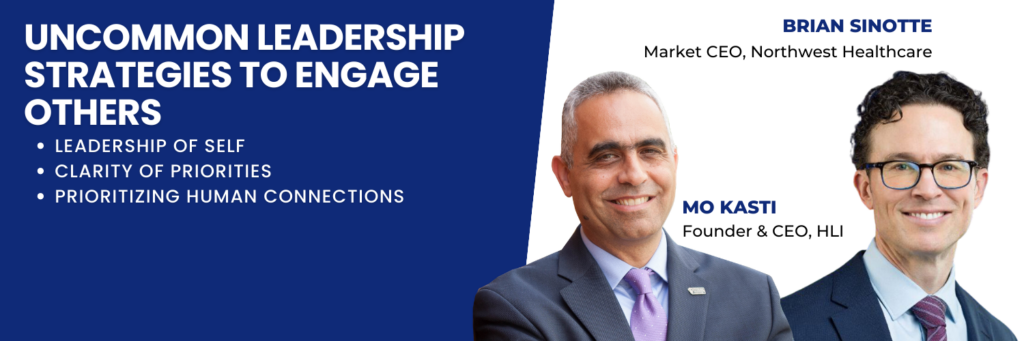
HLI CEO, Mo Kasti, was joined by Brian Sinotte, Market CEO of Northwest Healthcare in Tucson, AZ, for an executive conversation about leaders strategies.
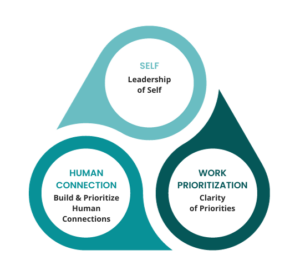
In the constantly evolving landscape of healthcare, leaders face a myriad of daunting challenges. From mounting financial pressures to disruptive forces and the constant churn of the workforce, healthcare leaders must steer their organizations through increasingly turbulent waters. To overcome these challenges and ensure the survival and success of their organizations, healthcare leaders must embrace a unique approach to leadership. We explore the concept of uncommon leadership in healthcare and highlight three essential strategic imperatives: Leadership of Self, Clarity of The Work, and Building and Prioritizing Human Connections.
3 Important Leadership Strategies for the Healthcare Industry

 Thriving amidst significant challenges begins with senior leaders setting the tone for their organizations. In an environment characterized by uncertainty and complexity, healthcare leaders must consistently bring their best to the table. To achieve this, executives must prioritize Leadership of Self, focusing on their own well-being and mental clarity.
A crucial step towards achieving this self-leadership is mindfulness. Being mindful involves cultivating a state of calmness, gratitude, and compassion, which enables leaders to be intentional, attentive, and empathetic. Without a calm mind and body, executives risk becoming reactive and overwhelmed, losing their ability to lead by example and, consequently, their effectiveness when their teams need them the most.
In addition, healthcare leaders must also eliminate the non-essential tasks and rigorously prioritize their time. In doing so, executives can ensure they are at their best while focusing on the highest priority items, while offering clarity and support to their teams. Optimizing time to preserve one’s body and mind is not selfish; it is necessary for providing the focus needed to navigate challenging times successfully.

 Healthcare is often burdened with complex hierarchies, ambiguous decision-making, and an overload of information, which can lead to a lack of focus and agility. This issue is exacerbated when leaders rapidly chase myriad indicators on a scorecard without clear prioritization across the enterprise.
The remedy lies in embracing “Clarity is King” (CIK) or “Clarity is Kindness.” (access playbooks on this approach). This entails setting crystal-clear expectations, reducing the number of high-priority initiatives, and ensuring alignment throughout the organization. Executives must communicate effectively and consistently, creating a shared understanding of priorities across key stakeholder groups and often complex matrixed organizational structures. Reducing ambiguity will unlock the power of teams across the organization to execute more effectively and efficiently.
For example, using an approach and set of tools like the Line of Sight process can help leaders clearly define and communicate the organization’s strategic imperatives. Deploying Line of Sight quickly fosters a shared mental model among key stakeholders, nurtures healthy dialogue and psychological safety, and empowers leaders to say “No” when necessary. By providing clarity and clear expectations for the highest priority work, leaders empower their teams to execute more effectively and accelerate engagement along the way.

 Post-pandemic, healthcare organizations face the challenge of a more unstable workforce and escalating turnover costs. Burnout, exacerbated by the pandemic and increased hustle in the workplace, has become a pressing issue. To combat these challenges and attract and retain top talent, healthcare leaders must prioritize building and nurturing human connections.
Leaders can engage the minds and the hearts of their teams with pragmatic optimism, offering transparency about challenges while maintaining a positive outlook for the future. Communication that acknowledges reality while inspiring hope can create a shared mental model and increase engagement.
Additionally, leaders must prioritize human connections within their organizations. Building trust and connections requires vulnerability, transparency, compassion, and humanity. Leaders should incorporate human connection-building into the daily rhythm of their organizations, making it a top priority rather than a sporadic event.
One practical approach is to make “Connections” the first agenda item for each staff/team meeting by dedicating the first five minutes of the meeting to building social connections and fostering relationships within your team. By building bonds as human beings, not just human doings, organizations can boost engagement, reduce turnover, and unlock their teams’ full potential.
Despite the significant challenges faced by healthcare leaders today, uncommon leadership strategies focused on self-leadership, prioritization of work, and human connection-building can guide organizations toward success and resilience. By embodying these uncommon imperatives, healthcare leaders can position their organizations for a brighter future in the ever-turbulent healthcare water.
If you are interested in implementing any of these 3 leadership strategies (Lead Self, Clarity, and Connection), contact us for free consultation.

How HLI Can Help Your Organization
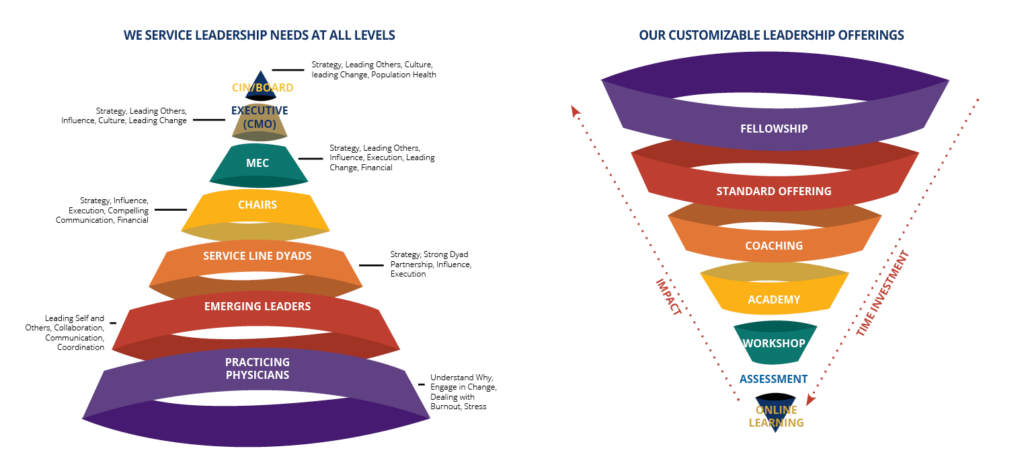
We are dedicated solely to the healthcare industry and have the depth and breadth to partner with global healthcare leaders to co-create solutions for the most pressing and complex challenges they are faced with at all levels including the organizational, executive, physician, team, and service line. Get in touch with us today to see how we can help your organization.