Physician Coaching Guide
Unleashing Potential: A Guide to Physician Coaching Excellence
In the ever-evolving landscape of healthcare, the role of physicians extends beyond clinical expertise. Today, effective leadership, communication, and adaptability are equally vital.
Physician coaching stands as an indispensable pillar in the realm of healthcare, serving as a transformative catalyst for physicians seeking personal and professional growth. In an ever-evolving medical landscape, where the demands on physicians extend beyond clinical expertise to encompass leadership, communication, and adaptability, coaching emerges as a strategic support system. It provides a confidential and collaborative space for physicians to navigate transitions, enhance leadership skills, and address challenges unique to their roles.
By fostering self-awareness, facilitating goal setting, and promoting continuous learning, coaching empowers physicians to excel in their professional journeys. Moreover, the positive ripple effects of coaching extend beyond individual physicians to positively impact team dynamics, organizational culture, and, ultimately, patient care. In essence, physician coaching is not merely a resource; it’s a vital investment in unlocking the full potential of healthcare professionals and ensuring the resilience and excellence of the healthcare system as a whole.
It is a partnership forged with physicians marked by trust, confidentiality and transparency to bring the best of them personally and professionally. Coaching is not residual work because someone is broken and not doing or behaving well.
Different from mentoring, the role of a coach is to ask questions that encourage and empower physicians to reflect, discover, and then act in ways that move them toward the agreed upon goal.
Who Can Use Coaching?
Physicians and physician leaders at all levels in an organization, a multi-specialty groups, pharma, insurance companies, start up, and in private practices.
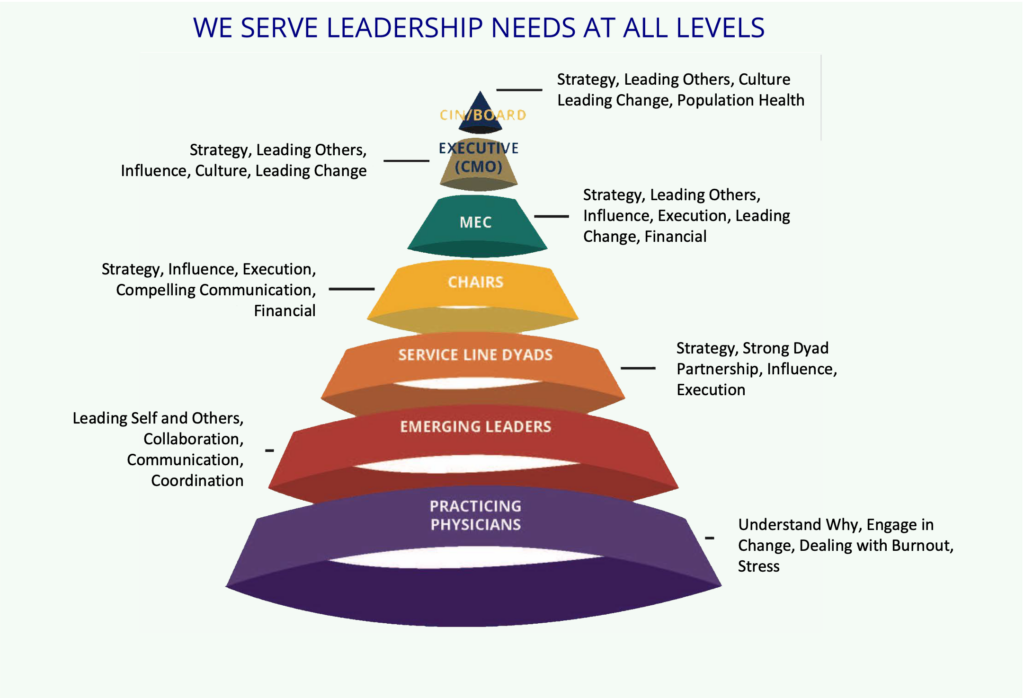
Physician leaders such as Chief Medical Officers, Chiefs of Staff, Chairs and Vice Chairs, Service Line Leaders, Dyad Leaders, Researchers, Physicians in the trenches, Private Practice Physicians, Physicians at insurance companies and Physicians in the pharmaceutical industry can benefit from coaching.
Diverse Types of Physician Coaching
- Transition Coaching: from Clinician to Clinician Leader
Transition coaching becomes indispensable when physicians evolve from clinicians to leaders. This specialized coaching addresses the challenges of leading their peers, communication, and relationship-building, mitigating the “Going to the Dark Side” perception by their peers often associated with stepping into leadership roles. Transition coaching is essential to prevent the leader from Savior Syndrome (Read more here).
- Group Dynamics Coaching: Fostering Collaborative Excellence
Beyond individual growth, group coaching delves into the dynamics of physician teams like hospitalist or cardiologist. Group coaching also involved physician and their immediate clinical teams including their dyad and nurses and Medical assitants. Whether for emerging leaders, newly hired physicians, or members of the Medical Executive Committee, this coaching format enhances collaboration, communication, and overall team effectiveness.
- Strategic Leadership Coaching: Elevating Executive Performance
Coaching extends beyond frontline physicians, reaching executive levels. Chief Medical Officers, department Chairs, and Chiefs of Staff benefit from targeted coaching to enhance their strategic leadership capabilities. This coaching focuses on acting as bridges between executive teams, boards, and medical staff.
- Performance Enhancement Coaching: Transforming Output
For physicians facing challenges in meeting expectations, performance coaching provides a structured partnership with specialized coaches. The collaboration includes a three-way agreement with immediate supervisors, ensuring a comprehensive approach to performance transformation.
- Disruptive Behavior Coaching: Cultivating Alignment with Organizational Values
Unique challenges posed by disruptive behaviors are met with empathy, curiosity, and in-person shadowing in this specialized coaching approach. Coaches guide physicians through difficult situations, aligning behaviors with organizational values and culture.
- Career Coaching: Charting Personal and Professional Trajectories
Career coaching goes beyond the clinical realm, guiding physicians in exploring passions, defining career directions, and developing strategies for both professional and personal growth.
- Wellbeing Coaching: Nurturing a Balanced Life
Wellbeing coaching focuses on physicians’ holistic health, helping them identify stressors and burnout triggers, and developing strategies to address these challenges for a balanced and fulfilling life.
- Project-Specific Coaching: Targeted Improvements
Project-specific coaching involves a specialized coach working with individual physicians or groups on targeted improvements, such as enhancing Sepsis Bundle compliance or improving patient experience.
- 360 self-awareness Coaching
Coach would administer a 360 comprehensive feedback assessment to provide more self awareness for the physicians. A comprehensive report would show the self assessment compared to other peers and stakeholders, manager and employees perceptions. Coaching includes developing an action plan and implementation of improvement.
- Service Line Coaching – Coaching physicians from a specific service line to work on service line culture, team dynamic, process and service line performance improvement. Engagement can be focused on the physician leader or the whole service line team.
Invaluable Impact of Coaching Types
Each coaching type serves as a tailored key to unlock specific facets of a physician’s potential, fostering growth, resilience, and excellence in both professional and personal spheres. The diverse array of coaching approaches ensures a holistic and customized journey for physicians at every stage of their careers.

Choosing Coaches: Internal vs. External Dynamics
1. Internal Coaches:
Internal coaches, being part of the same organization, offer accessibility and may have their fees covered. However, concerns about confidentiality and limited external experience may pose challenges.
2. External Coaches:
External coaches, though incurring additional costs, bring diverse experiences and resources to the table. Physicians often find greater openness due to the confidentiality associated with external partnerships.
Qualities of a Stellar Healthcare Coach:
A remarkable healthcare coach embodies a multifaceted skill set:
- In-depth Healthcare Knowledge: An understanding of the healthcare landscape, with direct experience being an added advantage.
- Active Listening Skills: The ability to listen attentively, fostering a space for physicians to express concerns and aspirations.
- Powerful Questioning: Rather than providing answers, effective coaches pose questions that stimulate introspection and growth.
- Compassion and Empathy: Essential qualities that create a supportive environment for physicians.
- Role Modeling: Leading by example, showcasing the attributes of an effective and compassionate leader.
- Co-Ownership: Collaborating with physicians to establish shared objectives and outcomes
Quantifying the Returns on Investment:
The benefits of physician coaching extend far beyond immediate gains. Investing in coaching yields:
- Physician Retention: A substantial return on investment, preventing the costly turnover of physicians. It is estimated that cost of replacing a physician can cost an organization anywhere from $500,000 to $1 million per physician (1). If coaching can help one physician from leaving your organization that is multiple return on your investment.
- Reduced Stress and Burnout: Mitigating the $4.6 billion annual cost attributed to burnout-related turnover and decreased productivity.
- Improved Engagement: Addressing the decline in physician engagement post-COVID, ensuring active participation in necessary transformations.
- Enhanced Performance Outcomes: Hospital quality scores show a notable 25% increase in physician-run hospitals compared to manager-run counterparts.
- Personal Satisfaction: A holistic approach to coaching contributes to increased self-confidence and improved work performance, relationships, and communication skills.
We Know Coaching Works. Our Proven Return on Your Investment Includes:
Improvement in Ability to Lead Others
Improvement in Ability to Think Strategically
Improvement in Ability to Impact Revenue
Improvement in Ability to Work with Team Members
What Makes Us Even More Unique – Our Satisfaction Guarantee
Our physician leadership training is proven to work for our healthcare clients and has a 100% satisfaction guarantee. We have worked with a variety of hospitals and clinics to improve their patient experiences and outcomes. Click here to learn more about our guarantee.
What People Are Saying About HLI Coaching
My leadership coaching experience was a true blessing. I was given wise advice, was asked tough questions and together explored possible options in dealing with very difficult situations in my professional life. This was a significant bonus to this excellent learning experience!

Dennis Alter, MD
AdventHealth FlaglerI have thoroughly enjoyed the presentations and activities during (our) leadership fellowship. However, none match my personal coaching when it comes to personal and professional motivation and a deeper understanding of the value that I bring to my facility and the organization as a whole. With my coaches help, I was able to look deeper inside myself and truly question my behavior and mental modals that can hinder or accelerate not only my career, but also the trajectory of my life. For these reasons, this has been an invaluable experience.