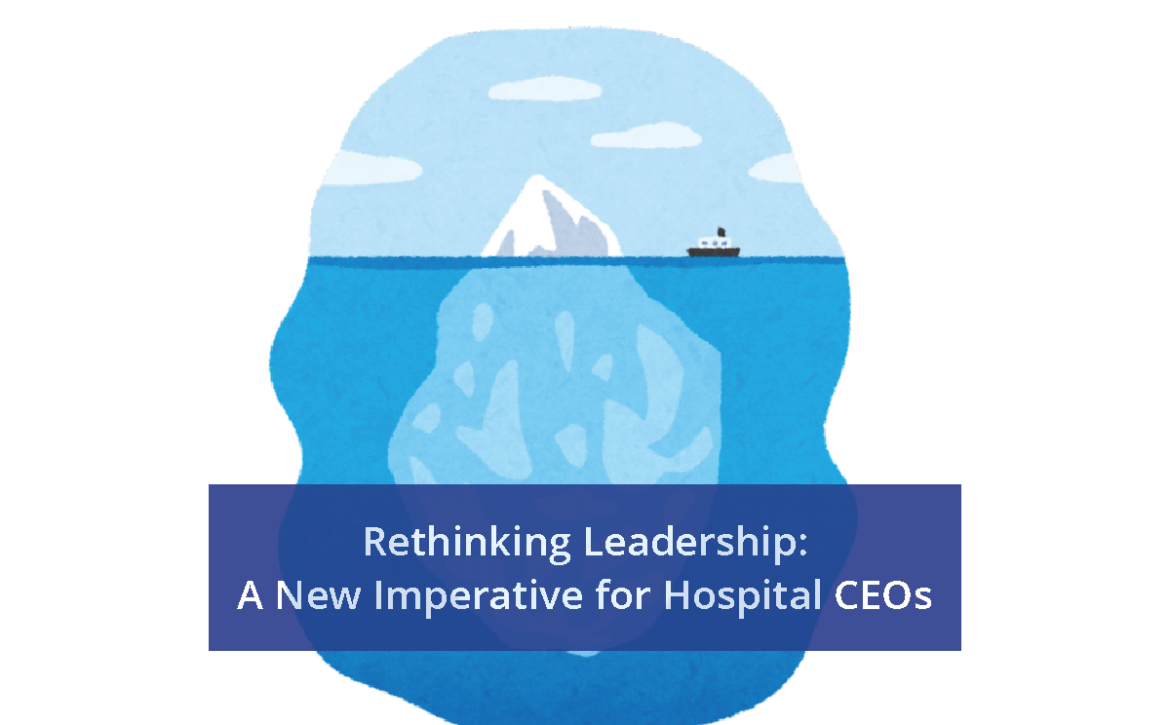
Rethinking Leadership: A New Imperative for Hospital CEOs
In healthcare, we pride ourselves on evidence, outcomes, and continuous improvement. Yet when it comes to leadership, many organizations still cling to assumptions that were formed in a very different world. Organizational psychologist Adam Grant warns that the biggest risk for leaders today isn’t thinking poorly, it’s rethinking too slowly.
Industries like retail and technology offer stark reminders. Borders, BlackBerry, Blockbuster, Kodak, Sears, and Toys “R” Us didn’t fail because they lacked smart people. They failed because they held tightly to old mental models long after the world had moved on.
For hospital CEOs, the parallel is hard to ignore. Clinical practice, patient expectations, workforce dynamics, and technology are all shifting faster than traditional governance and leadership habits. The question is no longer, “Are we good at strategy?” but, “Are we fast and honest about rethinking our strategy?”


From Support Networks to Challenge Networks
Most CEOs have a reliable support network, people who encourage them, smooth the path, and reinforce their confidence. Grant argues that high‑performing leaders need something more: a challenge network.
- A challenge network is made up of people who care enough to push back: They are often disagreeable givers—individuals who may come across as blunt or skeptical but are deeply invested in your success and the organization’s mission.
- They will surface uncomfortable truths rather than offering “comforting lies.”
Grant suggests explicitly inviting these people into a formal role:
- Tell them you value their candor.
- Acknowledge that in the past you may have been defensive.
- Give them permission—and an expectation—to choose honesty over loyalty.
For hospital CEOs, your challenge network might include:
- A respected chief of staff who is unafraid to question assumptions.
- A seasoned nurse leader who flags operational realities that don’t show up in dashboards.
- A board member or physician champion who consistently asks, “What if we’re wrong?”
The goal is not to undermine authority, but to strengthen decision quality by exposing blind spots early.
Psychological Safety: The Hidden Driver of Safety and Innovation
In healthcare, we talk constantly about patient safety. Grant reminds us that psychological safety—the belief that people can speak up without fear—is just as foundational.
When psychological safety is low, people:
- Stay silent about near misses.
- Avoid raising concerns about staffing, quality, or process design.
- Keep innovative ideas to themselves.
When it is high, they:
- Report errors and near misses early, allowing systemic fixes.
- Voice concerns before they become crises.
- Share ideas for better care models and workflows.
Many leaders unintentionally suppress this by saying things like, “Don’t bring me problems, bring me solutions.”
Research shows this discourages people from raising the hardest, most complex problems—the very ones that require cross‑functional solutions only a CEO can convene.
A more productive stance is:
- “Bring me problems you’re willing to help solve—even if you don’t yet know how.”
Equally important, Grant notes, is that leaders model vulnerability:
- Don’t just invite feedback; publicly acknowledge your own mistakes and growth areas.
- When leaders criticize themselves first, teams infer, “It’s safe to be honest here.”
For a hospital CEO, that might mean openly sharing:
- A strategic decision you’d make differently now—and what you learned.
- A communication misstep that created confusion, and how you’ll correct it.
That visible humility lays the groundwork for clinicians and staff to raise issues that otherwise stay buried.
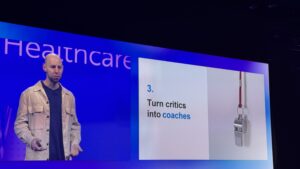
Turning Critics into Coaches: Ask for Advice, Not Just Feedback
Grant recounts teaching senior officers in the US Air Force and being told, in blunt terms, that the session wasn’t valuable. His turning point came when he went back to those same critics and asked, “What advice do you have for making this better?”
That shift—from feedback to advice—is powerful:
- Feedback tends to be backward‑looking (“Here’s what you did wrong”).
- Advice is forward‑looking (“Here’s what you can do differently next time”).
- Advice is more specific and more actionable.
For hospital CEOs, when physicians, nurses, or board members raise concerns:
- Don’t stop at, “What’s the problem?”
- Ask, “If you were in my role, what would you do?”
This not only improves the quality of input but also converts skeptics into co‑designers of solutions.
Close the Communication Gap: Help People “Hear the Tune”
Even when the strategy is right, Grant shows that leaders often under‑communicate it. He cites research where participants tap the rhythm of a song and estimate how often others will recognize it. Tappers thought their partners would get it half the time; in reality, recognition was 2.5%.
The reason? Tappers hear the full tune in their heads. Others hear only disjointed beats.
The same is true in organizations:
- You have lived with a strategy, a reorganization, or a new care model for months.
- You “hear the tune”—the rationale, the trade‑offs, the long‑term vision.
- Your teams are hearing it for the first time, stripped of context.
In a large executive‑sample study, leaders were nine times more likely to be criticized for under‑communicating than over‑communicating.
Under‑communication breeds doubt and mistrust; over‑communication, at worst, causes mild annoyance.
Practically, this means:
- Communicate the “why” behind major decisions multiple times, in multiple formats.
- Use analogies that make change feel familiar. Grant notes how “Hamlet with lions” saved the original Lion King pitch by tying it to a story everyone knew.
For hospital CEOs, that might mean:
- Framing a new care model by comparing it to a well‑known, successful program inside or outside your system.
- Relating digital front‑door initiatives to experiences patients already understand from banking or retail.
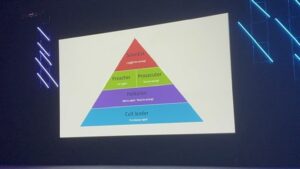
From Preacher and Prosecutor to Scientist
Grant warns that leaders can get stuck in three unhelpful modes:
- Preacher – defending sacred beliefs.
- Prosecutor – proving others wrong.
- Politician – seeking applause and votes.
All three assume “I’m right; others need to change.”
The alternative is to think like a scientist:
- Treat your strategies as hypotheses, not truths.
- Run experiments—pilots, A/B tests, limited‑scope trials—before scaling.
- Actively look for disconfirming evidence.
In a study of thousands of startup founders, those trained to think like scientists generated over 40 times the revenue of a control group and were more than twice as likely to pivot away from failing ideas. The difference was not brilliance; it was willingness to rethink.
For hospital CEOs, this suggests a shift:
- From defending “best practices” to experimenting toward better practices.
- From “We know what works” to “We’re constantly testing what works best now in this environment.”
The CEO’s Rethinking Mandate
In a rapidly changing healthcare landscape, your competitive advantage as a CEO will not be the elegance of your first answer, but the speed and integrity with which you’re willing to revise it.
Adam Grant’s message is clear:
- Build a challenge network that tells you what you don’t want to hear.
- Create psychological safety so your organization surfaces problems early.
- Turn critics into coaches by consistently seeking advice.
- Over‑communicate the “why” behind major changes.
- Lead like a scientist—test, learn, and pivot.
In healthcare, where outdated assumptions can harm both financial viability and patient lives, rethinking is not just smart leadership. It is a moral and strategic imperative.
Ready to rethink your leadership approach?
If you’re navigating complexity, change, or growth, our team partners with healthcare leaders to strengthen decision-making, build high-performing cultures, and accelerate results.